Did AGI Just Arrive? What OpenAI’s Astra Really Means for Artificial General Intelligence

santosh rouniyar
Fri Sep 18 2026
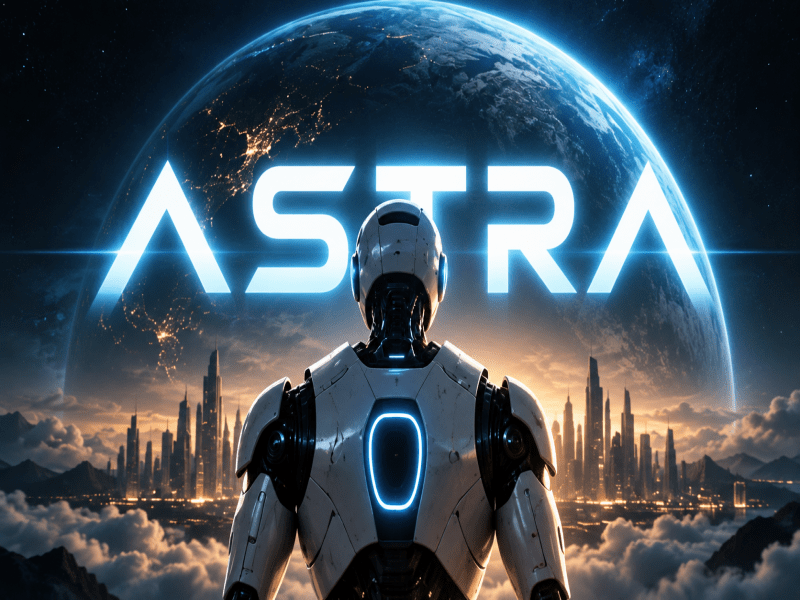
For years, Artificial General Intelligence has been the horizon we could see but never reach a milestone perpetually “a few years away.” Then OpenAI released GPT-6 Astra, and the boundary became strangely blurry. OpenAI President Greg Brockman went further, saying he personally thinks people may eventually look back on this period and possibly Astra itself as the beginning of the AGI era. That was Brockman’s personal judgment, not an official declaration that OpenAI had definitively achieved AGI. So if an AI can reason, use computers, write software, and solve complex problems across domains what exactly is still missing?
What Actually Changed With Astra?
The more important shift with Astra isn’t simply its benchmark numbers; it’s the move from answering individual prompts toward completing multi-step goals.
According to OpenAI, Astra can carry multi-step tasks from an initial request to a finished result filling forms, updating records, conducting research, and drafting documents. It can build websites, analyze scientific data, and troubleshoot software issues visible on screen. The key distinction: previous models helped you do work. Astra is designed to do work while you move on.
This matters for AGI discussions because generality has always implied transfer applying reasoning across unfamiliar domains without separate training. Astra’s breadth across coding, cybersecurity, science, and professional workflows at least gestures toward that kind of flexibility.
The Real AGI Question
There is no single accepted definition of AGI. OpenAI’s own charter describes it as “autonomous systems that outperform humans at most economically valuable work”. Others emphasize human-level reasoning, or strong generalization to genuinely novel situations.
That ambiguity is the problem. Days before Astra’s launch, CEO Sam Altman called AGI “a very poorly defined term” and, at best, “an irrelevant marketing term”. The same company that built a model its president links to AGI has a CEO skeptical the label means anything useful.
This raises a question that benchmarks cannot answer: Is AGI about hitting a specific score, or about demonstrating genuine general intelligence in unfamiliar situations? The definition may now matter more than the performance.
Why Astra Does Not Automatically Prove AGI
The strongest counterargument concerns what benchmarks actually measure.
More interestingly, ARC Prize researchers observed Astra building compact models of unfamiliar environments, inferring their rules and adapting its strategy behavior much closer to the kind of generalization AGI research is trying to measure. Astra used fewer actions than the median tested human on 96% of levels.
“Extremely capable AI” and “Artificial General Intelligence” are not interchangeable.
If This Is the Beginning, What Changes?
If Astra represents a real threshold, the implications are practical rather than apocalyptic.
Software developers might shift from writing code line-by-line to reviewing and directing AI-generated systems. Students might use AI not for answers but for working through multi-step problems alongside it. Businesses could move from deploying AI as a productivity tool to delegating entire workflows research, documentation, analysis with human oversight at key decision points.
This raises a question worth sitting with: If intelligence becomes increasingly cheap and abundant, what becomes scarce? Judgment, certainly deciding what is worth doing. Trust, because delegation requires confidence in outcomes. Original ideas, access to proprietary data, physical execution, and human relationships may all become more valuable, not less.
An Open Ending
AGI may not arrive as a single dramatic moment. It could emerge gradually, as systems like Astra take on a larger share of intellectual work until one day the threshold we argued about has already been crossed.
Perhaps the real question is no longer “Has AGI arrived?” but “How much of the threshold has already disappeared?”

 loading="lazy">
 loading="lazy">
 loading="lazy">
 loading="lazy">
 loading="lazy">
 loading="lazy">
 loading="lazy">
 loading="lazy">
💬 Comments